What Is the Big Bang? The Beginning of the Universe.
What Is the Big Bang? The Beginning of Our Universe.
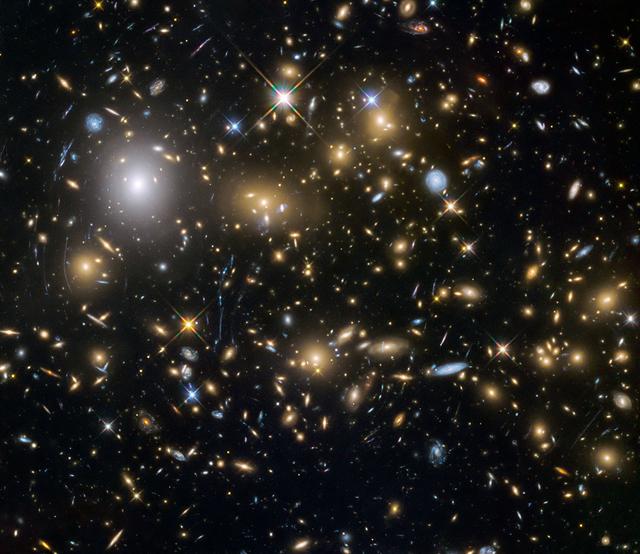 |
| Image Credit: NASA. |
Did you know how our Universe was born? Well, there is a theory that tells us about this mystery, named as the Big Bang. But what is Big Bang? Is this theory evidence based or not? The Big Bang is a theory, which is the most widely accepted theory about the Universe's birth. It tells us that the Universe was born 13.8 billion years ago, when the universe rapidly expanded creating time, matter, space and energy.
What Was Before the Big Bang?
It is still a mystery that what existed before the Big Bang. According to current science, it is said that nothing existed before the Big Bang. However, some scientists said that a cyclical universe, quantum vacuum or multiverses existed.
What Happened the Moment After the Big Bang?
After 0.00000000000000000000000000001 seconds, also known as Planck time, there was extreme heat and density and then the most basic particles like photons and quarks formed. Then the universe expanded at the speed of light forming stars, planets, galaxies, black holes, etc. The universe is still expanding a forming planet, galaxies, etc. for billions of years. The universe's expansion after the Big Bang is known as inflation.
Formation Of Atom:
About 3 minutes after the Big Bang, the first atomic nuclei formed. Around 380,00 years later, atoms were completely formed and then the universe became transparent. After this the light could travel freely, and this light is still around us known as Cosmic Microwave Background (CMB).
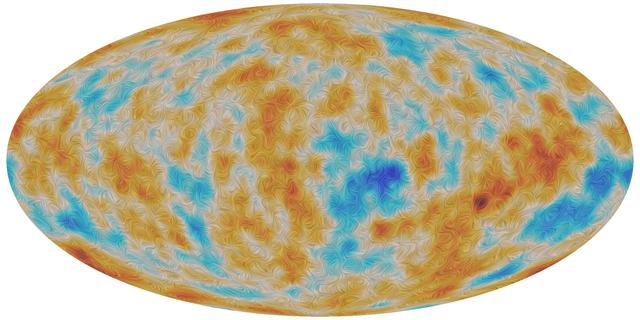 |
| Image Credit: NASA: CMB (Cosmic Microwave Background). |
Evidence For the Theory:
This theory is widely accepted because of this strong evidence:
How Is Redshift an Evidence of Big Bang?
Galaxies are moving away from us, which shows the universe is expanding since the Big Bang.
 |
| Image Credit: NASA. Expanding Galaxies. |
How Cosmic Microwave Background (CMB) Relates to the Big Bang?
An invisible glow of leftover radiation which is still around us, since the Big Bang.What Are Einstein's Equations About Big Bang?
Einstein's general relativity supports the expansion from a dense beginning.
Discovery:
- Georges Lemaitre: In 1927, he introduced the idea of ''primeval atom".
- Edwin Hubble: In 1929, he showed that the universe is expanding.
- Anzo Penzias And Robert Wilson: They both accidentally discovered the CMB in 1965, which is a strong proof of Big Bang.
Misunderstandings:
- It is misunderstood that Big Bang was an explosion. Instead, it was an expansion.
- It is misunderstood that it all started from a dot. Instead, universe have no center the Big Bang just happened everywhere.
- In reality, there was nothing before the Big Bang.
Facts:
- The big bang is still happening because the universe is still expanding.
- Universe has no center.
- We are made of star dust because atoms were formed in stars after the Big Bang.
- The CMB is the oldest light in the universe, nearly 14 billion years old.
Timeline:
- First seconds: Particles like photons and quarks formed.
- 3 minutes: After three minutes, the first nuclei formed.
- 380,000 years later: Atoms and CMB light appears.
- 1 billion years later: Stars and galaxies forms.
- 9 billion years later: Earth forms.
- 13.8 billion years later: Today-the present day.
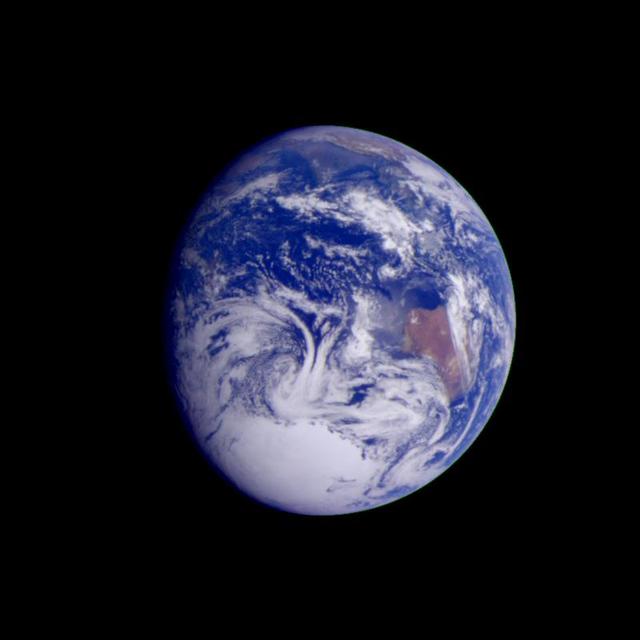 |
| Image Credit: NASA. Earth. |
Conclusion:
The Big Bang theory gives us a powerful understanding of the birth of the universe. But still there are many mysteries, related to its birth. The Universe is expanding -and our minds too. ✨


Comments
Post a Comment