Pulsar: The Cosmic Lighthouse.
Pulsars: The Lighthouse of the Cosmos.
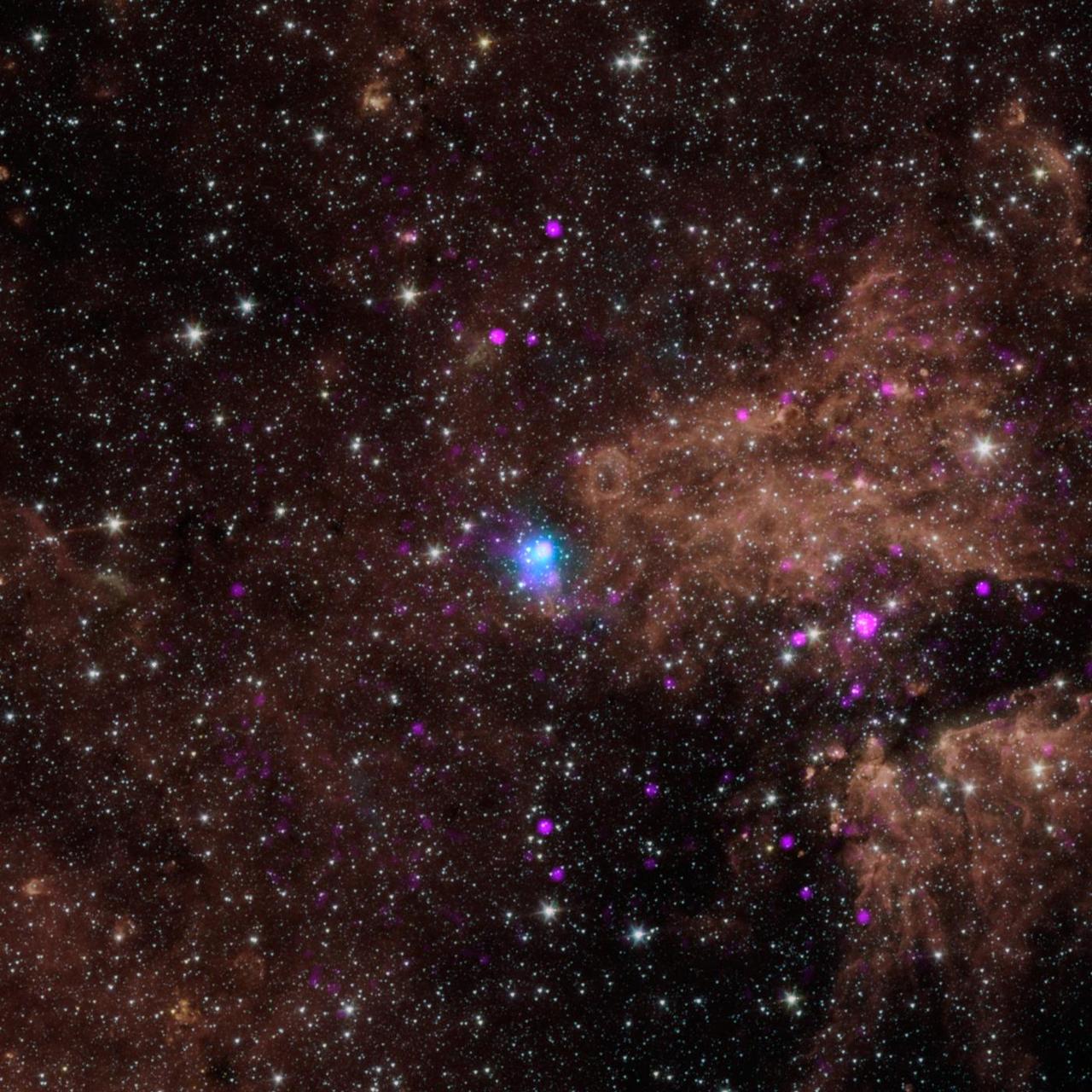
Image Credit: NASA. Pulsar.
What Is a Pulsar?
Pulsar is a type of neutron star. It is a dead star which don't fades but starts spinning very rapidly and shoots out beams of light from its magnetic poles like a lighthouse. It is 20 km wide and has more mass than the Sun.
How Does a Pulsar Work?
Pulsar spins like a ballerina. It is fast in spinning because it is a dead star which's core collapsed, this collapse makes that star spin faster and have stronger magnetic field than our Earth's. This star shoots out radio waves, gamma rays or X-rays from its poles, in narrow beams. These beams are not always pointing towards the Earth, we just see a pulse of the beam and that's why it is called a pulsar.
How Were the Pulsars Discovered?
In 1967, Jocelyn Bell Burnell was analyzing data from a telescope designed to study quasars. But she noticed something odd, which was that every day, in the same part of the sky, her chart showed a regular, pulsing radio signal. The signal was extremely precise which was pulsing every 1.337 seconds, which was so unusual that she thought these might be aliens! The source was jokingly nicknamed as LGM-1 which means "Little Green Men”.
What Was It Truly?
Further investigation showed that this was not from aliens, but something natural, spinning and incredibly regular. After finding more about these “pulses” from different places in space, they realized they had discovered a new class of star which was a rapidly spinning neutron star emitting beams of radiation. They named it as pulsar which was the short form for pulsating star. This discovery opened a new branch of astrophysics which was pulsar astronomy. This pulsar was named as PSR B1919+21.What Are the Types of Pulsars?
There are several types of pulsars ever discovered:1. Radio Pulsar:
What Are the Types of Pulsars?
There are several types of pulsars ever discovered:
1. Radio Pulsar: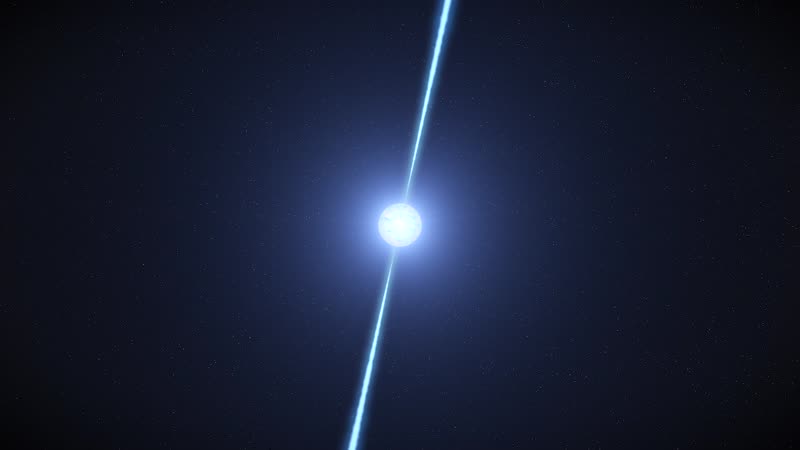
Image Credit: NASA. Radio Pulsars.
|
| Image Credit: NASA. Radio Pulsars. |
Radio pulsars are the most common type of pulsars. They emit pulses in radio waves. These pulsars are used as clocks of the cosmos.
2. X-Ray and Gamma Ray Pulsars:
These pulsars emit high-energy pulses. These pulsars are usually young and violent.
3. Millisecond Pulsars: Are They Fast?
Yes, these pulsars are super-fast which means they do hundreds of spins in just one second! These pulsars are formed when an old pulsar sucks matter from a companion star and stars spinning it up like a Beyblade. These pulsars are known as recycled pulsars.
4. Binary Pulsars:
3. Millisecond Pulsars: Are They Fast?
Yes, these pulsars are super-fast which means they do hundreds of spins in just one second! These pulsars are formed when an old pulsar sucks matter from a companion star and stars spinning it up like a Beyblade. These pulsars are known as recycled pulsars.4. Binary Pulsars:
 |
| Image Credit: NASA. Pulsar in a Binary System. |
These pulsars orbit another pulsar or a star. These types of pulsars helped in proving Einstein's general relativity by showing how gravity warps time.
Are Pulsars the Natural Timekeepers?
Pulsars are so consistent that they rival atomic clocks. They have been used to navigate spacecrafts, test general relativity and search for gravitational waves via Pulsar Timing Arrays.
Detection: How Are Pulsars Detected?
Pulsars are detected primarily by radio telescopes that capture their regular and rhythmic pulses of energy which are usually radio waves coming from space.
Step By Step Detection Process:
1. Radio Telescopes Scan the Sky:
Giant dish-shaped telescopes like Arecibo, Green Bank, or Parkes constantly listen to the sky. They scan for radio signals from different parts of space.2. Look For Regular Signals:
3. Signal Confirmation:
Once a potential pulse is found, astronomers re-observe the region and check if it's not human-made e.g. satellites, radar. Then they compare it with pulsar databases. If the signal repeats exactly and isn’t interference, then it's a pulsar.4. Frequency and Period Analysis:
They use Fourier transforms to break the signal into components. Helps identify the pulse period and confirm the signature of a spinning neutron star.5. Cataloging:
New pulsars are named and then astronomers track their location in the sky, their rotation speed and signal strength.Instruments That Helped in the Detection of Pulsars:
- Parkes Radio Telescope.
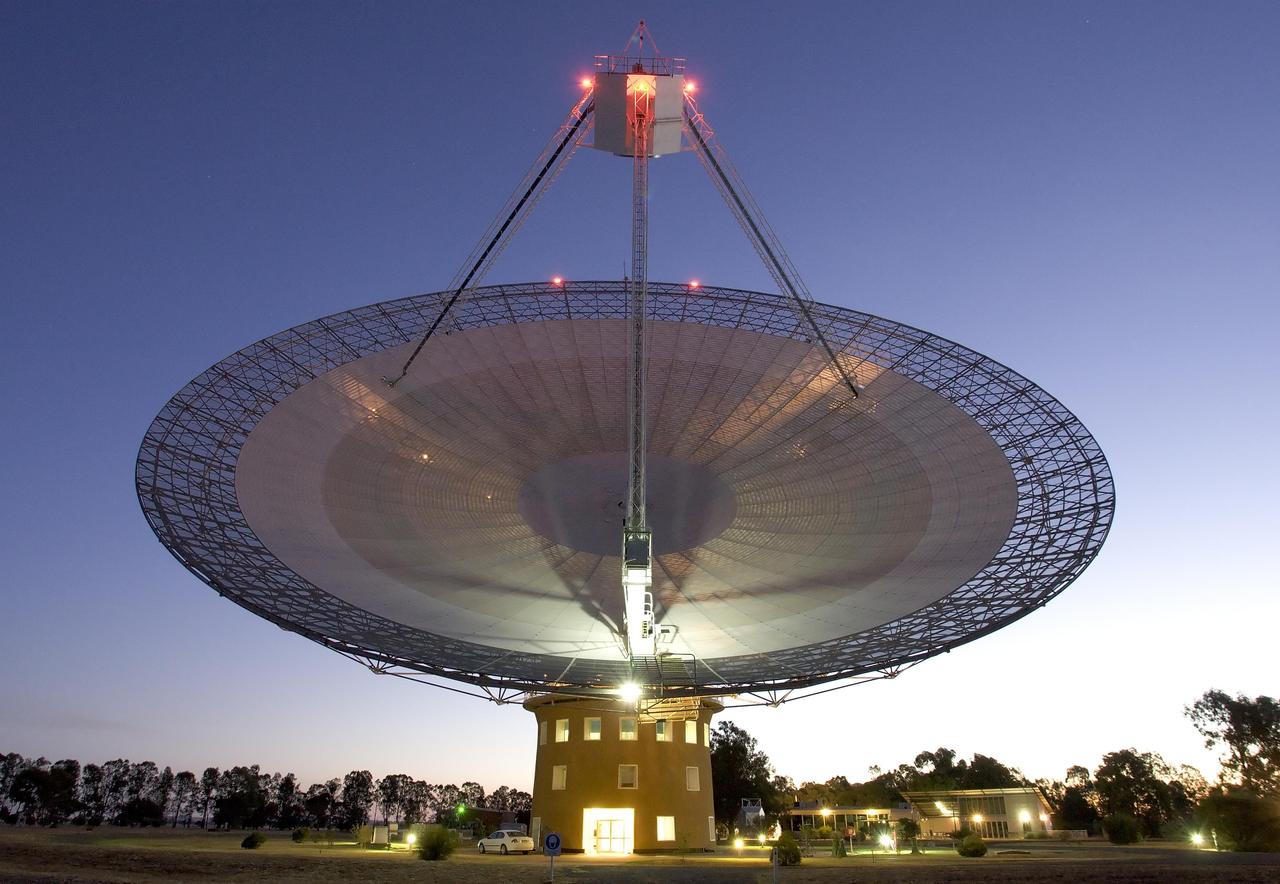 |
| Image Credit: NASA. Parkes Radio Telescope. |
- Green Bank Telescope.
- FAST Telescope.
- LOFAR Array.
- Arecibo Observatory.
Famous Pulsars:
Crab Pulsar:
 |
| Image Credit: NASA. Crab Nebula. |
PSR B1919+21:
This was the first pulsar ever discovered. It looks like a steady metronome.PSR J1748-2446ad:
It is the fastest known pulsar ever. It spins 716 times per second.Fun Facts About Pulsars:
- When discovered in 1967, the pulses were so precise that scientists thought they might be alien signals. The first one was named as LGM-1 (Little Green Men).
- They suddenly speed up for a moment, like a hiccup. We think it’s due to changes in the star’s crust and yes, neutron stars can “quake.” It's like a glitch in pulsars.
- Some pulsars glow in visible light so you can watch them with a telescope in the night sky.
- When in a binary system, some pulsars eat a nearby star’s material and get faster and brighter.
- If their magnetic field gets wild, they might transform into magnetars which are even more dangerous and mysterious.
- Pulsars shoot out beams of electromagnetic radiation and as they spin, these beams sweep past Earth like a lighthouse beam.
- Pulsars gradually lose energy and spin more slowly until they “die out” and become silent neutron stars.
- They’re used to map the galaxy.
- They were the first cosmic source of “Fast Radio Bursts” (FRBs).
- The Voyager Golden Record launched in 1977 contains a pulsar map and it shows our position in the galaxy using the timing of 14 known pulsars. If aliens ever find it, they could use it to locate Earth.
- Known as “intermittent pulsars,” they can go silent for days, weeks, or even years and then suddenly start pulsing again. We still don’t fully know why.
In short pulsars are one of the creepiest things in the Universe and they spin very fast.


Comments
Post a Comment