What Are Magnetars? The Most Powerful and Mysterious Stars in the Universe.
What Are Magnetars? The Most Powerful and Mysterious Stars in the Universe.
 |
| Image Credit: NASA. Magnetar. |
What Is a Magnetar?
A magnetar is a rare and extremely magnetic type of neutron star which is the incredibly dense remnant left behind after the explosion of a star in supernova. Magnetars are known for their extremely strong magnetic fields. In simple terms, a magnetar is a dead star with the strongest magnetic field.Formation: How Are Magnetars Born?
Magnetars are born from supernova explosions of massive stars, just like the neutron stars. But what makes them different from a neutron star is that they have a strong magnetic field and fast spin.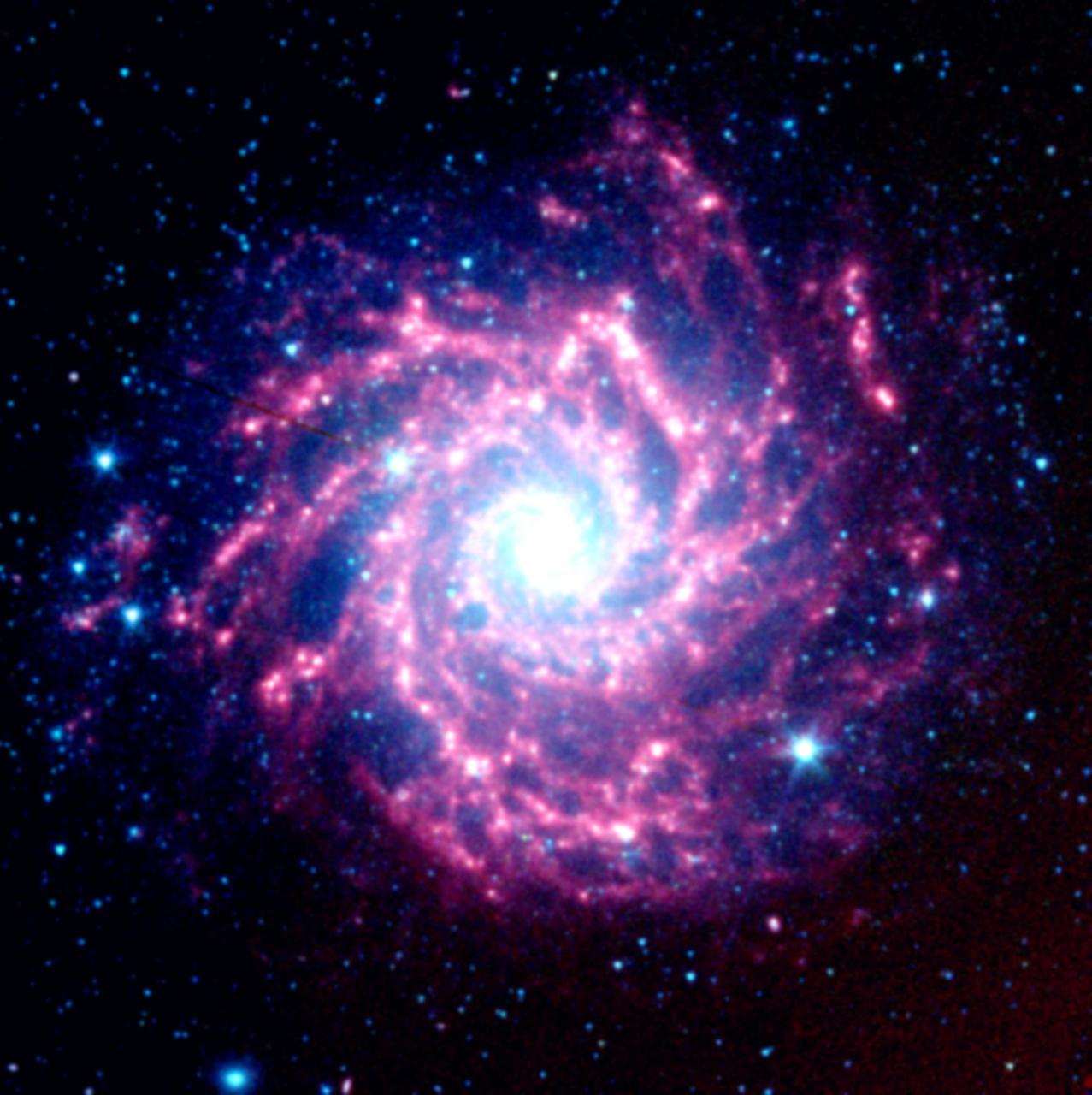 |
| Image Credit: NASA. Supernova. |
Here Is How It Happens:
A massive star dies in an explosion called supernova. Its remnants forms into a neutron star with extremely strong magnetic field and fast spin. Through this, a magnetar is born.Magnetic Power:
The Strongest:
A magnetar’s magnetic field is 10¹⁴ to 10¹⁵ gauss, Earth's is 0.5 gauss and a refrigerator's magnetic field is 100 gausses. This means that a magnetar can twist atoms and rip molecules apart from thousands of kilometers away. It can strongly interrupt electronics on Earth. This shows how powerful its magnetic field is.
Fast Radio Bursts (FRBs): Very brief and powerful radio waves or signals from deep space.
Gamma-Ray bursts (GRBs): Extremely energetic explosions.
Some Black Hole Mergers: When magnetars collapse.
Appearance: What Does a Magnetar Look Like?
We cannot see a magnetar with our eyes because they are too far, small, and don’t emit light like stars. But telescopes detect them by:
Soft gamma repeaters (SGRs):
These are the bursts of gamma rays.Anomalous X-ray pulsars (AXPs):
These are strong and irregular X-ray pulses. Sometimes, they flare up and emit giant bursts of radiation which are some of the brightest explosions we have ever seen in the Universe.Discovery: When Was It Discovered?
Discovery of the First Magnetar In 1988:
In 1982, two physicists Robert Duncan and Christopher Thompson proposed the idea of a magnetar and the first magnetar was later confirmed in 1998. They confirmed it by connecting X-ray with gamma ray bursts with a new kind of neutron star which had an extremely strong magnetic field and fast spinning. That magnetar was named as SGR 1806-20. It had bursts of energy that can't be explained by a normal neutron star's behavior.Additional Discoveries Later: What Discoveries Were Made Later?
The Giant Flare of 2004 by SRG 1806-20:
On December 27, 2004, a magnetar released the brightest burst of gamma rays ever recorded from outside the solar system. It lasted only 0.2 seconds, but it released as much energy as the Sun releases in 250,00 years. It temporarily affected the Earth's ionosphere. It was visible to spacecraft across the Solar System. This confirmed that magnetars can release immense amounts of energy.Fast Radio Bursts (FRBs) Linked to Magnetars:
In 2020, scientists found FRB 200428 which was the first fast radio burst coming from inside our own galaxy Milky Way. This FRB was linked to a known magnetar named SGR 1935+2154. This discovery played an important role in the mystery of FRB's source. This discovery also showed scientists that magnetars can produce FRBs.Swift J1818.0−1607: The Youngest and Fastest Magnetar Ever Discovered.
The Swift J1818.0-1607 magnetar was possibly 240 years old and it spanned once every 1.36 seconds, which showed radio and X-ray emissions. These emissions and radio waves showed that it was one of the youngest and fastest spinning magnetars ever discovered. This magnetar also proved that magnetars could also have complex characteristics, that acts like both magnetars and pulsars.Magnetars with Stronger Fields Than Predicted:
In 2023, a study suggested that some magnetars may have stronger magnetic field than imagined. This may possibly be beneath the surface of magnetars. This study also suggests that these stronger magnetic fields also cause starquakes and explain why some magnetars appear calm until they burst suddenly. |
| Image Credit: NASA. Magnetars Merging to Form Blackhole. |
Magnetars May Be Forerunners to Form Black Holes:
Some studies suggested that magnetars could be the middle stages between neutron stars and black holes and especially those with extreme mass. In simple words, if a magnetar gains more mass or collapses under its own gravity might become a black hole.Starquakes on Magnetars: Do They Also Experience Quakes?
Some studies suggested that magnetars also experience crust-breaking events called starquakes, which release bursts of gamma rays. These are similar to earthquakes but happen on the surface of a star. These starquakes explain sudden magnetic energy releases. And this pattern supports solid crust theories about neutron stars.Strange Surface Activity on Magnetars: (Thermal Hot Spots):
Telescopes have observed strange hot spots on magnetars that shift their positions, appear and disappear and are hotter than their surroundings. This may suggest that magnetic tension affects the star's surface unevenly which are similar to sunspots but more extreme.Magnetars Found in Star-Forming Regions:
Astronomers found many magnetars near young star clusters. This supports the idea that magnetars are born from massive stars and that they form quickly within a few thousand years. This also helps astronomers to estimate how often they form in galaxies.Affects: Can Magnetars Affect Earth?
There is no direct danger to Earth from magnetars. Magnetars are far away and rare. But their gamma-ray bursts are studied closely, because if one ever happened nearby within 10 light-years, it could disrupt Earth’s atmosphere. But according to recent studies, no magnetar is found near Earth.Links to Other Mysteries: Are Magnetars Linked to Other Space Mysteries?
Yes, magnetars are suspected to be linked with other space mysteries which are:Fast Radio Bursts (FRBs): Very brief and powerful radio waves or signals from deep space.
Gamma-Ray bursts (GRBs): Extremely energetic explosions.
Some Black Hole Mergers: When magnetars collapse.
Can We See Magnetars?
We can't see magnetars with our naked eyes, but we can detect them using NASA’s Chandra X-ray Observatory, Fermi Telescope, and Swift Telescope. They look like bright X-ray spots in space, usually near supernova remnants.Facts About Magnetars: What Are the Most Amazing Facts About Magnetars?
- If a magnetar was as close as the Moon near Earth, it would vanish every magnetic storage device from Earth.
- Its crust can crack due to magnetic stress; these cracks are known as starquakes.
- Magnetars spin slower over time because of their intense magnetic drag.
- Magnetars have extremely strong gravitational fields and magnetic forces that can twist spacetime.
- Their magnetic field can cause quantum vacuum birefringence which is a quantum effect where space behaves like a prism and bending light differently depending on its polarization.
- Magnetars have twisted magnetic fields and not smooth like Earth’s magnetic field. These cause their outer layers to stretch, snap, and release radiation, which is similar to solar flares, but a billion times stronger and magnetic storms around the star which leads to violent eruptions.
- They may contain exotic matter.
- Theoretically, magnetars can be used as galactic beacons or tools for interstellar communication.
- Some astronomers believe that magnetars are behind some super-bright supernovas called "magnetar-powered SLSNe'' which means Super-Luminous Supernovas.


Comments
Post a Comment